by Sudipt Singh Kunwar
27 Nov 2019
How mismanagement, corruption, and improper infrastructure has lead to water crisis.
This year when an Indian city went dry, it caught attention from all around the world. Chennai, capital of Indian state Tamil Nadu despite being a coastal city was in headlines because of its water mismanagement .
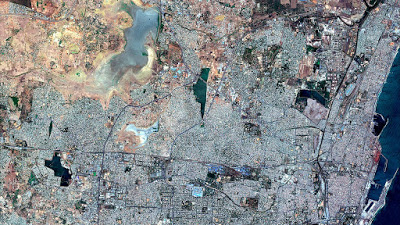
(Image Courtesy: The Weather Channel)
Chennai is practically the first Indian city to have gone dry with a rainfall deficit of 41 percent, as reported by Central Water Commission, a premier Technical Organization of India in the field of Water Resources, under Ministry of water resources(Govt. of India). Soon after Chennai’s water crisis, NITI Aayog (Planning Commission) – A government Think Tank, released a report citing that 21 Indian cities will run out of groundwater by 2020. The list some of the major cities like Bengaluru, Delhi, and Hyderabad.
But Iraq, a Country in Middle East which once had the most fertile region is facing Water Crisis for more than 2 decades now because of water mismanagement and corruption of officials.
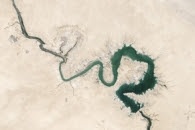
(Image: NASA Visible Earth)
Iraq relies mainly on two rivers Tigris and Euphrates. Both these rivers originate from Turkey. The Euphrates enters Iraq via Syria while few tributaries of Tigris originates from Iran. So this gives no control of the rivers to Iraq and much of the river water is utilized by the controlling countries itself. Iraq gets its 81 percent of water supply from Turkey, Syria, and Iran.
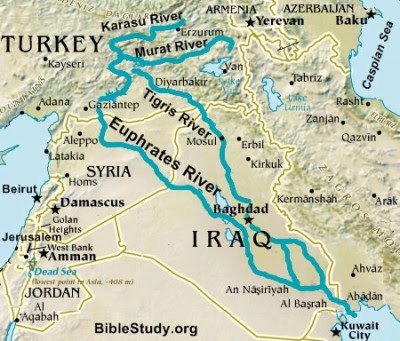
So when does Iraq started to loose water?
Since 1970, Turkey has built around 20 dams, including Ataturk Dam (5th largest in the World), on the Euphrates and its tributaries. Syria has also built several dams. Today only a quarter of the Euphrates flow reaches Iraq.
The same has happened with the Tigris. Turkey has built so many dams across, including Ilusu Dam, which has blocked so much of Tigris flow that residents in Baghdad could cross the river by foot.
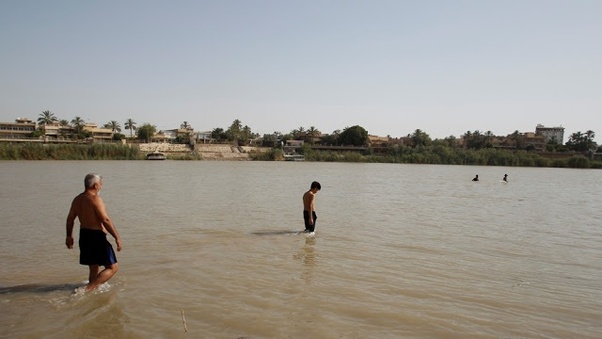
In September 2018, Iraq’s ministry of water resources said that levels and river like Tigris in Baghdad have dropped up to 40 percent in the last 20 years.
Iran has built around 600 dams in the tributaries, that has worsened the situation. Due to the weaker flow in rivers, the salt water from the Persian Gulf is flowing upstream, killing fish and crops.
US Airstrikes and Sanctions further worsened the crisis.
During the Gulf war of 1990, Saddam Hussein, then leader of Iraq, invaded Kuwait, the United States ally. The US led a coalition to retaliate an airstrike. Though the airstrike was to destroy the potential of Iraq’s Nuclear bomb facilities, it also bombed the four major hydro-electric facilities and water treatment plants.
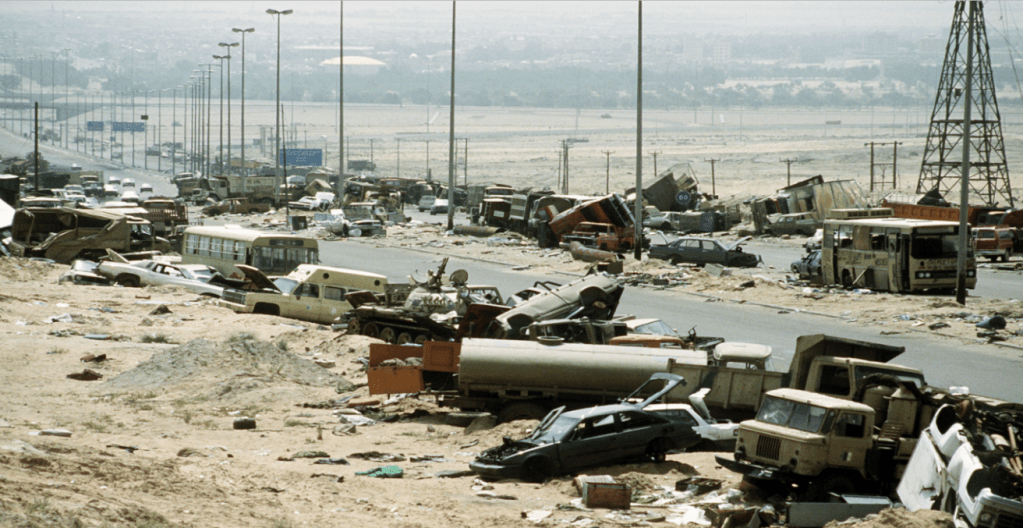
(Image Courtesy: Socialist Worker)
Soon after the attacks, US implied sanctions and these brought an economic catastrophe for Iraq. Iraq could not even buy water facilities from other countries and many water treatment facilities failed and thousands of Iraqi(s) died of water-borne diseases.
Mismanagement and Corruption of US Government.
In 2003, US invaded Iraq and they quickly toppled Saddam’s regime and installed a temporary Iraqi government.

The invasion further damaged the infrastructure. 40 percent Iraqi citizens did not have access to safe drinking water and 70 percent sewage treatment plants needed repair.
So US and Iraqi government decided to rebuild the infrastructure, but it was a complete failure. Millions of dollars were lost due to Mismanagement and Corruption.
Rise of Insurgency
In 2011, US pulled out of Iraq. This gave rise to the insurgency. The invasion of ISIS was a another snag to water situation in Iraq. By 2013, ISIS had control of Ramadi Dam, cutting down the water flow. They poisoned the water supply with oil.
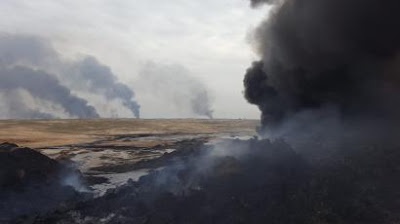
By 2018, ISIS has lost control and territory, but damage to Iraq water was already done.
The After Effects……….
Basra the economic center and 2nd largest city in Iraq is the home to more than 4 million people. It is a place where both the rivers, Tigris and Euphrates meet to form Shatt Al-Arab. About 80 percent of Iraq’s revenue comes from Basra province. But Basra’s canals are choked with debris, sewage, and running garbage.
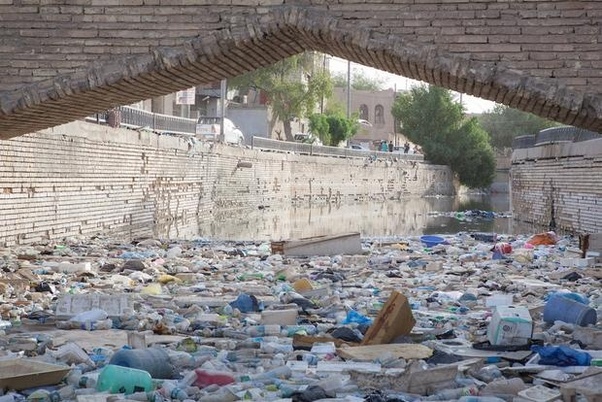
Basra which was once known as the “Venice of Middle East” is now suffering from a water crisis.
Commission of Integrity has mentioned in their report that
- 13 desalination plants were never operated since 2006.
- About $600 million were pledged for the water treatment projects that were never completed.
- Basra’s sewage system was supposed to receive multi-million dollar upgrade in 2014 but the sewage still leaks into the Shatt al-Arab.
Whether it be Iraq or Chennai, mismanagement, corruption, and improper infrastructure have led to the crisis.
 Once a most fertile country have gone dry today!
Great Article.
LikeLiked by 1 person